
Lilac vs Isabella French Bulldogs: The Color Difference Buyers Confuse Most
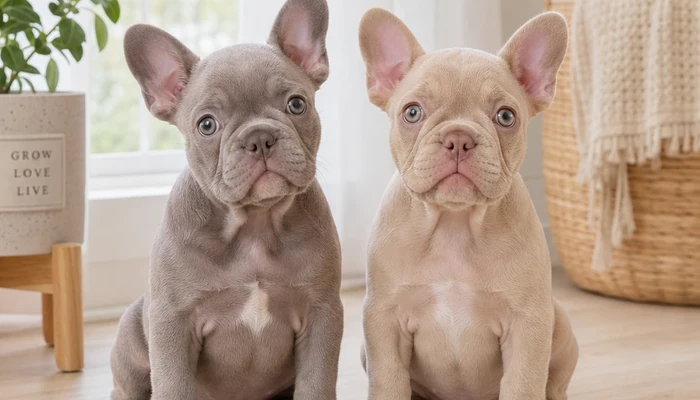
Lilac vs Isabella French Bulldogs: The Color Difference Buyers Confuse Most is a question buyers often ask after seeing two puppies with similar pale, gray-brown coats described by different names. The confusion is understandable: color terms are not always used consistently, and a photograph cannot reveal a dog’s genetic makeup. In some breeding circles, “lilac” and “Isabella” describe overlapping color combinations; in others, breeders use the names to suggest different shades or genetic details.
This guide explains what the labels generally mean, how the major coat-color genes work, and why a visual impression alone cannot prove a puppy’s color genotype. You will also find a practical comparison, a guide to reading DNA results, responsible questions to ask a breeder, and advice on evaluating health and long-term care. The goal is not to decide which color is more desirable. It is to help you understand what is being represented, check whether the evidence supports it, and keep health, structure, temperament, and welfare ahead of a fashionable name.
Why lilac and Isabella labels are easy to mix up
French Bulldog color names are often used as shorthand, not as a single universally controlled vocabulary. A breeder may use a term to describe the visible coat, while a DNA laboratory reports specific variants at particular genetic locations. Those descriptions do not always line up neatly. As a result, two people can use “lilac” and “Isabella” differently even when they are looking at similar dogs.
Lighting adds another layer of uncertainty. A coat can look cooler, warmer, lighter, or darker depending on sunlight, indoor bulbs, camera processing, age, and the color of the surrounding surfaces. Puppies can also change in appearance as their coat matures. A phone photo can help show what a dog looks like, but it cannot establish which alleles the dog carries.
Color words describe appearance, while DNA describes variants
“Lilac” and “Isabella” are descriptive labels used in the dog world. A DNA report, by contrast, identifies the variants tested at named loci. The report may confirm a combination associated with a particular color expression, but it does not automatically settle which informal label every breeder should use. Buyers should therefore ask what the breeder means by each word and request the supporting test details.
Breeder terminology is not always consistent
Some breeders use Isabella as another name for a dilute liver or chocolate-colored dog. Others use it for a particular shade or for dogs they believe carry additional color variants. Lilac is also used in more than one way. These differences do not necessarily prove that someone is being dishonest, but they do mean that a label without a clear explanation is incomplete information.
- Ask for the color name the breeder uses and how they define it.
- Ask which genetic results support that description.
- Compare the report’s tested loci and variants, not just a marketing summary.
- Do not assume a puppy’s appearance confirms its genotype or future breeding value.
What the main French Bulldog color genes can tell you
Coat color results from the interaction of genes that influence pigment production, pigment distribution, and dilution. For the color combinations commonly discussed as lilac or Isabella, breeders often refer to the brown or chocolate-associated B locus and the dilution-associated D locus. These are useful starting points, but they are not a complete explanation of every visible shade or every label a breeder may use.
At a simplified level, a dog needs two copies of a recessive variant at a locus for that particular recessive effect to show. A dog with one copy may carry the variant without displaying the associated color. The actual appearance depends on the dog’s full genetic background and on how different loci interact. This is why a short label such as “lilac carrier” should prompt a request for precise test results rather than serve as a substitute for them.
The B locus and brown-based pigment
The B locus is associated with variants in TYRP1 that can change black pigment to brown or liver pigment when the dog inherits the relevant recessive combination. In breeder shorthand, a dog with two copies of a brown-associated variant is often described as “b/b.” That notation is useful only when the laboratory report explains which variant was tested and what its result means.
The D locus and pigment dilution
The D locus is associated with dilution. A dog that inherits two copies of a dilution-associated variant may show a diluted version of its underlying pigment. In common shorthand, “d/d” refers to two copies of a tested dilution variant. The visible result can differ according to the underlying base color, other genes, and the individual dog.
Other loci can complicate the color description
Additional loci may affect pigment, pattern, or the way a color appears. Some French Bulldog DNA panels test variants beyond B and D; other panels test a narrower set. A test can only report the variants included in that test. For an accessible overview of genetic inheritance and testing concepts, see [French Bulldog DNA and color testing](https://efrenchies.com/french-bulldog-dna), and for a broader discussion of how inherited traits interact, review [the role of genetics in French Bulldogs](https://efrenchies.com/the-role-of-genetics-in-french-bulldog).
How lilac and Isabella are commonly described
In everyday French Bulldog discussions, both terms are often associated with a diluted brown-based coat. Some breeders distinguish them by shade or by an additional genetic feature; others use them as near-synonyms. There is no safe way to infer an exact genotype from the word alone. Instead, think of each name as a claim that needs a definition and evidence.
A practical explanation might say which tested variants the dog carries, what the breeder calls the resulting appearance, and whether the term is being used according to a specific laboratory or breeding convention. If a breeder cannot explain the distinction in plain language, ask for the actual report and seek clarification from the testing laboratory or a qualified veterinary genetics professional.
Lilac as a commonly used description
“Lilac” is frequently used for a light, cool-toned, grayish or taupe coat associated with brown-based pigment and dilution. The nose and eye-area pigment may also appear lighter than in a non-dilute brown-based dog. These features can vary, however, and a particular shade does not prove that a dog has a specific set of variants.
Isabella as a commonly used description
“Isabella” is also commonly applied to dilute brown or liver-colored French Bulldogs. Some breeders reserve the term for a particular shade or genetic combination, while others use it interchangeably with lilac. That variation is precisely why buyers should request the breeder’s definition and the test results instead of relying on a color name as if it were a standardized laboratory diagnosis.
Why a shade comparison is not a genetic test
Coat color is affected by more than one factor, and images can distort subtle differences. A dog’s coat may look warmer in indoor light and cooler outdoors. Meanwhile, editing, filters, and exposure adjustments can make two dogs appear more alike—or more different—than they are. Photographs can support a description of appearance, but they cannot establish parentage, carrier status, or a specific color genotype.
Lilac vs Isabella: a practical comparison for puppy buyers
The table below compares how the terms are commonly used, while making clear what cannot be concluded from a label alone. It is not a formal breed standard or a substitute for a laboratory report. Because terminology varies, the most useful comparison is the breeder’s stated definition alongside the actual genetic evidence.
| Question | Lilac label | Isabella label | What the buyer should verify |
|---|---|---|---|
| What does the word usually describe? | A pale, often cool-toned brown-based coat associated with dilution. | A dilute brown or liver-based coat; some breeders use the word for a particular shade or combination. | Ask the breeder to define the term in writing. |
| Does the label have one universal meaning? | No. Usage can vary among breeders and testing contexts. | No. Usage can overlap with lilac and may vary by breeder. | Do not treat the name as a standardized genetic result. |
| Can appearance prove the genotype? | No. Lighting, age, and other genes can affect appearance. | No. A similar-looking coat can have a different genetic explanation. | Request the laboratory report and tested loci. |
| Does the color name predict health? | No. The label alone does not establish health or quality. | No. The label alone does not establish health or quality. | Review health screening, structure, breathing, and veterinary records. |
| Should the label determine price or suitability? | It should not replace a welfare-based assessment. | It should not replace a welfare-based assessment. | Compare the whole dog and the breeder’s practices, not rarity claims. |
When a breeder says that one term is “more rare,” ask what evidence supports that statement and whether the claim refers to a particular tested genotype, a local naming convention, or simply a marketing description. Rarity does not demonstrate better health, more suitable temperament, or higher breeding quality. The dog’s welfare and the breeder’s transparency should remain central.
Reading a French Bulldog color DNA report accurately
A DNA report is more useful than a color label, but it still needs careful interpretation. First, confirm that the document belongs to the puppy or its parent, and check whether it identifies the dog by registered name, microchip, or another reliable identifier. Then review the laboratory, test date, loci tested, and the result at each relevant locus. If the report uses unfamiliar symbols, ask the lab to explain them.
Keep in mind that “tested clear” can mean different things depending on the test and the variant examined. A result at one locus does not rule out variants at another locus. Likewise, a color panel is not a comprehensive health screen. It cannot establish that a dog is free of all inherited disorders, breathing problems, joint issues, or other conditions that may affect French Bulldogs.
Check the identity and scope of the report
Confirm which dog was tested and what the laboratory actually examined. A screenshot of a breeder’s summary may omit important details, such as the specific variant, sample identification, or test limitations. Ask to see the full report when the color claim is important to your decision. A transparent breeder should be able to discuss it without suggesting that the document proves more than it does.
Understand carrier, clear, and affected language
For a recessive variant, a dog with one copy is often described as a carrier, while a dog with two copies may express the associated trait. Exact terms depend on the variant and laboratory. A carrier is not automatically unhealthy, and a color result should not be confused with a disease diagnosis. Ask how the result affects the dog itself and, if breeding is proposed, how it should inform a responsible pairing.
Ask what the panel does not test
A panel may test only a selected group of color variants. It may not assess every gene that could influence coat appearance. The report also cannot certify overall health or predict the full quality of a puppy’s life. For more context about common coat descriptions, compare the discussion in [common French Bulldog colors](https://efrenchies.com/common-french-bulldog-colors), while remembering that a color overview cannot replace an individual dog’s results.
- Who performed the test, and can I review the complete report?
- Which loci and variants were included?
- Does the report identify the sample and the tested dog clearly?
- Which claims are supported by this report, and which are not?
- Who can explain any result that is unclear?
How color inheritance affects litters and breeding claims
Inheritance depends on the specific variants carried by both parents. For a recessive variant, each parent can pass one copy to a puppy. A breeder should be able to explain the possible outcomes of a pairing using the parents’ actual test results, rather than promising an exact color based only on appearance or pedigree language.
Even when the parents’ results make a particular inheritance outcome possible, that does not guarantee that every puppy will have the same visible shade. Multiple loci can influence the final coat, and the terms used to name that coat may differ among breeders. A responsible explanation distinguishes what is genetically possible from what is likely to be visible and what is merely a marketing prediction.
What a responsible pairing explanation includes
Ask the breeder to show how each parent’s result contributes to the expected outcomes. The explanation should identify the relevant variants, describe what puppies may inherit, and be honest about the limits of the prediction. If you are not planning to breed, the main relevance may be understanding the puppy’s documented traits and avoiding unsupported promises about future offspring.
Pedigree is context, not proof by itself
A pedigree can help trace family relationships, but a written color name in a pedigree does not independently verify a dog’s DNA. When a breeder makes a precise genetic claim, request the corresponding test evidence. Likewise, a DNA result does not prove that a dog has sound structure, good breathing, or a suitable temperament. Each kind of information answers a different question.
Ethical breeding puts the dog before the color outcome
Color planning should never override careful selection for health, temperament, and functional structure. French Bulldogs have breed-related health needs that deserve thoughtful attention in any breeding program. The French Bulldog Club of America’s [health information for owners and breeders](https://frenchbulldogclub.org/akcgazettehealth) is a useful starting point for learning why health considerations belong in conversations about breeding decisions.
A lilac or Isabella coat is not a health certificate
Color alone cannot tell you whether a French Bulldog is healthy, whether its parents received appropriate screening, or whether the puppy will have a particular lifespan. Some conditions cannot be fully prevented, even when breeders use thoughtful selection and testing. However, responsible screening, sound breeding choices, appropriate veterinary care, and informed ownership can help reduce avoidable risks and support a dog’s wellbeing.
French Bulldogs can face concerns involving breathing, heat tolerance, skin, eyes, joints, and other areas. Individual risk varies, and no single color label explains it. Research on French Bulldogs has documented important breed health concerns; a peer-reviewed study available through the [National Library of Medicine](https://pmc.ncbi.nlm.nih.gov/articles/PMC6147463) helps put breed health and welfare into context. Discuss a particular puppy’s records and your own concerns with a veterinarian.
Evaluate breathing and functional structure
Ask how the breeder assesses breathing and what they observe during ordinary activity. A puppy should not be selected only for a striking head shape, a very short muzzle, or a rare coat. A veterinarian can assess the individual dog, while a responsible breeder should be open about the health of the parents and relatives and about any known concerns.
Review health records, not just color paperwork
Request the puppy’s veterinary examination information, vaccination and deworming records, and details of any health screening performed on the parents. Ask what conditions are known in the family and how the breeder responds when a health problem appears. DNA color testing and health screening are different activities, so neither should be presented as a replacement for the other.
Look at the breeding program’s priorities
A breeder’s choices can be informative. Do they talk first about health, temperament, and structure, or do they emphasize rarity and price? Do they explain the risks and limits of their claims? An educational resource on [health considerations linked to unique coat colors](https://efrenchies.com/health-implications-linked-to-unique-coat-colors) can add context, but every claim should still be evaluated carefully and discussed with qualified veterinary professionals.
- Ask what health checks were completed and request the supporting records.
- Ask how the parents breathe, move, and behave in everyday settings.
- Ask whether the breeder knows of recurring conditions in the family.
- Be cautious if color is presented as proof of health, quality, or temperament.
- Plan a veterinary visit after bringing a puppy home.
Questions to ask a breeder who advertises lilac or Isabella puppies
A clear conversation can reveal whether the breeder is using color terminology carefully. You do not need to be a genetics expert. You do need enough information to understand what is being claimed, which evidence supports it, and what the breeder knows about the puppy’s health and background.
Questions about the color claim
Ask what “lilac” or “Isabella” means in that breeder’s program. Ask which DNA results support the label, whether the puppy itself was tested, and whether the breeder can provide the full report. If only the parents were tested, ask what their results establish and what remains an inference. A responsible answer should distinguish facts from expectations.
Questions about health and temperament
Ask what health evaluations were completed for the parents and what records you can review. Find out how the breeder describes each parent’s breathing, movement, and temperament. Ask how puppies are raised and socialized, what veterinary care they receive before going home, and what support is available if a concern develops later.
Questions about contracts and ongoing support
Read the agreement before paying a deposit. Ask about health guarantees, return or rehoming terms, veterinary responsibilities, and any breeding restrictions. A transparent breeder should make expectations understandable and give you time to consider them. If a breeder pressures you to commit because a color is “rare” or may disappear, slow down and request the missing details in writing.
- “How do you distinguish lilac from Isabella in your program?”
- “May I see the full color DNA reports for the puppy or its parents?”
- “Which health screenings and veterinary checks have been completed?”
- “What do you know about breathing, skin, or other health concerns in this family?”
- “How are the puppies socialized, and what support do you provide after pickup?”
- “Can I review the contract and health records before making a decision?”
Families comparing breeders can also read this broader overview of [French Bulldog breeders and buyer expectations](https://efrenchies.com/all-about-french-bulldog-breeders). Use it as a starting point for your own questions, not as a substitute for speaking directly with a breeder, reviewing documents, and consulting your veterinarian.
Care priorities for a French Bulldog with a dilute coat
A lilac or Isabella label does not automatically call for a special care routine. Begin with the individual dog’s skin, coat, and overall health rather than assuming that every dog with a particular color will have the same needs. French Bulldogs benefit from routine veterinary care, a suitable diet, regular but sensible activity, and protection from overheating. Your veterinarian can advise you about a dog’s specific skin or coat concerns.
Check skin and coat regularly
During ordinary grooming, look for redness, irritation, flaky areas, sores, or persistent itching. Pay attention to folds and any spots where moisture or debris can collect. If you notice recurring discomfort or skin changes, contact a veterinarian instead of trying multiple products without guidance. Color does not diagnose a skin condition, and online claims about color-linked problems should not replace an examination.
Protect French Bulldogs from heat and overexertion
French Bulldogs may have limited tolerance for heat and strenuous exercise, especially if they have breathing difficulties. Offer water, choose cooler times for walks, and stop activity if the dog seems distressed. Never leave a dog in a hot vehicle. Ask your veterinarian what activity is appropriate for your individual Frenchie, particularly during warm weather or if the dog has a known respiratory concern.
Keep routine care practical and consistent
Use a balanced diet recommended for your dog’s age and health, keep up with preventive veterinary visits, and maintain a comfortable body condition. Grooming needs are usually manageable, but nail care, ear checks, and gentle coat care still matter. The right plan depends on your dog, not on whether a breeder calls its coat lilac or Isabella.
When a color premium should make you pause
Rare-color marketing can make buyers feel they must act quickly or pay more to secure a particular puppy. Take time to examine what the price represents. A color label may reflect a breeder’s pricing decision, but a high price does not prove responsible breeding, health testing, or a better match for your home. Likewise, a lower price is not automatically evidence of poor care; the breeder’s practices and documentation matter more than the number by itself.
Separate rarity language from verifiable facts
Ask what makes a color “rare” and how that claim was determined. A breeder should be able to explain the term without implying that rarity guarantees quality. Check whether the color description matches the test results and whether the breeder can explain the limits of the report. Avoid basing a decision on urgency, scarcity language, or dramatic claims that cannot be supported.
Consider lifetime costs before choosing any puppy
Purchase price is only one part of dog ownership. Budget for routine veterinary care, preventive treatment, food, grooming, training, supplies, and unexpected medical expenses. French Bulldogs may need specialized veterinary attention, so it is sensible to consider access to care and emergency funds before bringing one home. A puppy whose color you admire still needs the same long-term commitment as any other Frenchie.
- Do not let a rare-color claim replace your health and temperament assessment.
- Compare the records and care provided, not only the advertised price.
- Take time to review the contract and ask follow-up questions.
- Choose a puppy whose needs and temperament suit your household.
A decision path for comparing two similar-looking puppies
If two puppies look alike but carry different color labels, use a repeatable decision process. Start with welfare and suitability, then examine evidence for the color description. This order helps prevent the label from distracting you from the questions that matter most to a dog’s long-term wellbeing.
Step one: assess the puppy as an individual
Ask about the puppy’s veterinary examination, development, socialization, and observed temperament. Spend time observing how the puppy responds to people and its surroundings, while recognizing that a brief visit cannot predict every future behavior. Ask the breeder how the puppy’s personality compares with its littermates and what home environment may suit it.
Step two: verify the family and health information
Review the parents’ health information and ask about relevant family history. Clarify what tests were performed, who performed them, and what each result means. A breeder should welcome reasonable questions and avoid making absolute promises. If something is unclear, pause and consult a veterinarian or the relevant testing laboratory.
Step three: evaluate the color claim separately
Ask the breeder to define the label, provide the DNA evidence, and explain what the results do and do not establish. If the puppy has not been tested, ask what can be concluded from the parents’ results and what cannot. Do not assume two different labels identify different genotypes, or that the same label is used consistently by every breeder.
Step four: decide based on fit and transparency
Choose the puppy and breeder that best fit your household and demonstrate clear, welfare-focused practices. If the breeder cannot answer basic questions, pressures you to pay quickly, or treats color as more important than health and temperament, consider stepping back. A careful decision is more valuable than securing a particular shade.
Frequently asked questions about lilac and Isabella French Bulldogs
Are lilac and Isabella French Bulldogs the same color?
Sometimes the terms are used to describe overlapping or similar dilute brown-based coats; sometimes breeders use them to indicate different shades or genetic details. There is no single meaning shared by every breeder. Ask for the breeder’s definition and the DNA results that support it.
Can I tell the difference between lilac and Isabella by looking?
Not reliably. Lighting, camera settings, coat age, and individual variation can change how a dog appears. A visual assessment describes the coat’s appearance, but it cannot verify the dog’s genotype. A relevant DNA report is needed to support a genetic claim.
Does lilac or Isabella mean a puppy is unhealthy?
No color label by itself proves that a puppy is healthy or unhealthy. Health depends on many factors, including inherited traits, breeding decisions, environment, veterinary care, and the dog’s individual circumstances. Ask about health screening and records, and arrange veterinary care for your puppy.
What DNA results should a buyer request?
Ask for the complete report and a clear explanation of the loci and variants tested. The useful tests depend on the claim being made, and a color panel does not replace health screening. If the report uses unfamiliar terms, contact the laboratory or a qualified professional for interpretation.
Is one color more valuable or desirable than the other?
Desirability is subjective, and a color’s price is not a measure of the puppy’s health, temperament, or suitability. Focus on verified information, responsible breeding, and the dog’s needs. Avoid paying a premium based solely on a label or an unsupported rarity claim.
Do lilac or Isabella French Bulldogs need special skin care?
Not automatically. Care should be based on the individual dog’s skin and coat condition. Check regularly for irritation and consult a veterinarian about ongoing itching, redness, or sores. Avoid assuming that a color label diagnoses a skin problem or determines the right treatment.
Can a breeder guarantee a specific shade in a litter?
A breeder may use parental DNA results to estimate which genetic outcomes are possible, but visible shades and naming conventions can be more complicated. Ask what the estimate is based on and whether the breeder is describing a possibility or making a guarantee. Be cautious of promises that are not supported by documented results.
Should I choose a puppy based on color?
Color can be one preference, but it should not outweigh health information, temperament, structure, responsible care, and compatibility with your household. Make sure the breeder is transparent and that you understand the dog’s lifelong needs before committing.
Make the color claim clear before you make the commitment
The safest way to compare lilac and Isabella French Bulldogs is to treat each word as a description that needs context. Ask how the breeder defines it, examine the relevant DNA results, and remember that genes, appearance, and informal naming conventions are not interchangeable. Neither label, on its own, proves health, quality, or suitability.
Before choosing a puppy, put the evidence in this order: individual health and temperament, responsible breeding and care, transparent records, and then coat-color preference. Ask questions until you understand the answers, take time to review the agreement, and involve a veterinarian when you need guidance about health or care. If you are ready to explore current puppy information after completing that research, you can view available Frenchie puppies and continue the conversation with clear expectations.
About Elite Frenchies
Elite Frenchies is a French Bulldog breeding program focused on carefully selected, health-tested parents, responsible genetics, and lifelong support for puppy owners. The program emphasizes structure, temperament, and breathing rather than color trends alone, alongside early socialization, sensory exposure, and basic training foundations. Transparent communication about health, pedigree, contracts, and buyer expectations helps families make informed decisions. Elite Frenchies helps families and French Bulldog owners in United States and nearby areas with ethical breeding and lifelong support. This information is educational and does not replace advice from a qualified veterinarian.
french bulldog bloodlines, available puppies ready now, available puppies selection