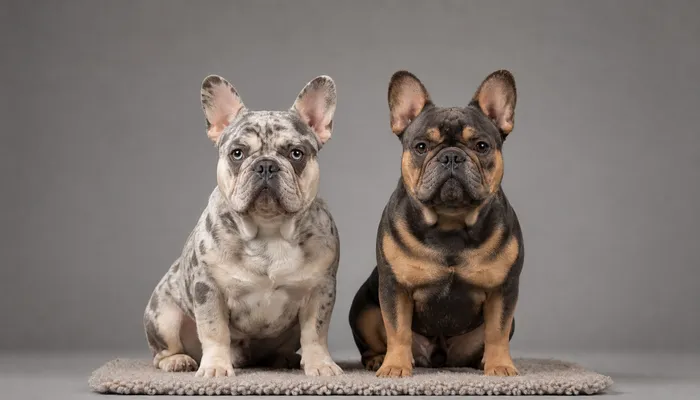
Two fluffy French Bulldogs can sit inside the same photograph, share the same long soft coat, and still belong to two different color programs with different genetics, different rarity and a different starting price. That is exactly where most buyers lose their footing when they compare an Isabella Fluffy with an Isabella Merle Fluffy on a phone screen. The isabella fluffy vs isabella merle fluffy question was never about which dog photographs better. It is about which genes are actually present, and who can prove it.
Both lines come out of the same cocoa family, both can carry the long-coat gene, and at eight weeks old they can look far more alike than their price tags suggest. The difference sits in one additional locus, and in how carefully a breeder verifies that locus before making any claim about color.
Two Lines, One Breed: What Actually Differs
From across a room, an Isabella Fluffy reads as one warm, even tone with a soft wash of pigment through the coat. An Isabella Merle Fluffy takes that same base and adds pattern on top of it: mottled patches, uneven pigment, sometimes a marbled look across the body with darker and lighter zones in a single coat. Both dogs are long-haired. Only one of them carries a visible merle pattern.
This is the point most buyers miss. Fluffy describes coat length. Merle describes pigment pattern. They are two separate traits that happen to appear together in one line, which is why a fluffy French Bulldog is not automatically a merle, and a merle French Bulldog is not automatically fluffy.
| Trait | Isabella Fluffy | Isabella Merle Fluffy |
|---|---|---|
| Base color | Cocoa with dilution, one even warm tone | Same cocoa and dilution base |
| Pattern | Solid, uniform across the body | Merle mottling, patchwork, varied pigment |
| Coat length | Long and soft | Long and soft |
| Where the difference comes from | Base color loci only | Base color loci plus the merle locus |
| DNA verification before listing | Required | Required, including merle status |
| Typical starting point | From $3,500 | From $4,500 |
The Genetics Behind Isabella and Isabella Merle
Cocoa comes from the B locus. When a dog carries two copies of the brown allele, black pigment is replaced by brown pigment. Dilution works on a separate locus: two copies of the dilute allele soften that brown into the washed, warm, greyish-tan tone the market calls Isabella. Neither of those loci creates a pattern. They create a base.
Merle sits on its own locus and behaves as an incomplete dominant. A single copy typically produces the mottled, patchy expression most buyers recognize as merle. Two copies produce a double merle, and that is where the conversation has to stay honest: double merle breeding is associated with known auditory and ocular risks in the breed. Responsible programs do not pair merle to merle, and they do not guess whether a dog carries the gene. They test both parents before a pairing is even planned, and they test the litter afterward. That is not marketing language, it is the difference between a documented line and a description typed under a photo.
Coat length is a third, entirely separate story. The long, fluffy coat comes from a recessive trait, so a dog needs two copies to show it visually. With one copy, the dog has a normal short coat but can still pass the gene on. This is where fluffy carrier French Bulldogs come from, and why a short-haired puppy out of fluffy parents can be a genuinely valuable animal in a breeding program rather than an afterthought. The isabella fluffy vs isabella merle fluffy comparison only makes sense once all three traits — base color, pattern and coat length — are handled as separate questions.
How DNA Testing Confirms Which Line You Have
Color is not decided by photograph. Lighting changes a cocoa coat dramatically, and a young puppy’s pattern deepens, shifts and sometimes softens over the first months of life. A breeder who names a line from a picture is describing an impression, not a genotype. A breeder who runs a panel before listing is describing what the dog actually carries.
A proper panel confirms the base color loci, the merle status of the dog as a clear non-merle, single merle or double merle, and the fluffy coat status as visual or carrier. It also screens the breed-relevant health markers that matter in French Bulldogs, including the respiratory and joint considerations that every serious buyer should be asking about rather than assuming. When a listing says Isabella Merle Fluffy, the question worth asking is simple: which of those markers were tested, and can you see the results?
This is the standard we work from, and it is the same standard behind how we genetically verify every puppy before listing it. Nothing is described as Isabella, merle or fluffy until the test results are back.
Which Line Fits Your Home
Coat care is the first practical difference a new owner notices. A long, dense fluffy coat holds more undercoat than a short coat and needs regular brushing to keep it from matting, especially behind the ears and around the chest. In dry winter climates and heated indoor spaces, static and dry coat texture show up faster, so a simple routine of brushing plus a gentle moisturizing approach to the coat does more for the dog than any expensive product.
Temperament and daily routine are essentially the same across both lines, because the coat and the pattern do not change the dog. What changes is how the line is planned. Isabella Fluffy litters and Isabella Merle Fluffy litters are both built around genetic pairings, and pairings depend on breeding cycles. Neither line is available on demand, and a breeder who tells you otherwise is telling you something about their process. Typical wait times depend on where you land in the list and which combination you are hoping for.
Price follows rarity, and it should be presented as a starting point rather than a fixed number. Isabella Fluffy puppies generally begin around $3,500, Isabella Merle Fluffy around $4,500, with Platinum Fluffy lines reaching higher because fewer pairings can produce them and each litter is planned well in advance. Gender, color expression and how strongly the merle pattern reads in an individual dog all move the final number, and none of that can be quoted honestly before a specific puppy exists. If you want the fuller picture of how rarity is priced across the program, our breakdown of rare colors in the French Bulldog walks through it line by line.
If you are still weighing whether a merle line is the right fit, two things are worth reading before you commit. The first is what actually makes an exotic color rare — rarity is a genetic outcome, not a label. The second is how to spot color claims with no genetic backup, because the difference between an Isabella Fluffy and an Isabella Merle Fluffy disappears entirely if nobody tested the dog.
When you are ready, the next step is not a purchase — it is a conversation. Tell us which line you are drawn to, whether you are looking for a male or a female, and roughly when you would want a puppy home. We will walk you through the pairing that produces that line, show you the DNA results behind the parents, and let you know where the current waitlist stands. You can reach the breeder directly through the contact page, or by phone at 708-637-0511. Exotic lines are planned months ahead, so the earlier the conversation starts, the better the fit tends to be.