
How to Read a French Bulldog Color DNA Panel Before Paying for Rare Traits
When you’re searching for a French Bulldog, you may hear about rare colors like lilac, chocolate, merle, or “fluffy” coats. With the rise in popularity of exotic traits, more breeders offer DNA panels to prove a puppy’s genetic makeup—sometimes making bold promises about uniqueness and value. But can you interpret those results confidently, and do rare color genes always mean a healthier or more suitable companion? In this guide, you’ll learn how to read a French Bulldog color DNA panel before paying for rare traits, what responsible breeders prioritize, and how to protect your investment—both for your family and your future Frenchie. Elite Frenchies shares a practical, ethical framework to decode DNA results, with honest pros and cons, step-by-step insights, and buyer education you need before making any decision.
Understanding French Bulldog Color Genetics: Key Basics for Buyers
French Bulldog coat color is determined by complex interactions among genes. Popular rare colors include blue, chocolate, lilac, cream, and certain patterns (like merle or pied). Each has a specific genetic “code”—a combination of alleles (gene variations) inherited from both parents. However, not all rare genes are beneficial.
DNA color panels list these alleles in formats like “At/At,” “d/d,” or “n/Co,” each pointing to a gene associated with a particular color or pattern.
- B (Brown/Chocolate): Determines chocolate coloring—recessive, needs two copies (b/b) for expression.
- D (Dilution/Blue): Creates dilution (blue); “d/d” indicates full dilution, producing blue coats.
- Co (Cocoa): Presence of cocoa coloring.
- E Locus (Cream): Controls cream to red shade expression. “e/e” means the dog cannot produce black pigment.
- K Locus (Brindle): Determines whether a dog is solid color, brindle, or fawn.
- M Locus (Merle): “M/m” or “M/M” shows merle gene—may have health implications.
- L Locus (Fluffy): Visual or carrier status for the long-haired (“fluffy”) trait.
Understanding which gene combinations are safe, desired, or may be controversial is critical before placing a deposit on a Frenchie puppy.
What Does a French Bulldog DNA Panel Show?
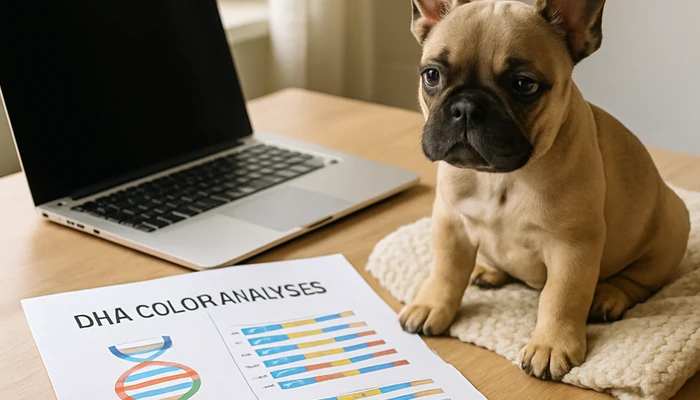
DNA panels reveal the genetic makeup of a French Bulldog regarding color, coat pattern, and some hereditary health traits. Results typically arrive as a chart or list with codes per gene locus. Here’s what a typical report includes:
- Color Genes: Locus (B, D, Co, E, K, A, S, M, L) with variants (e.g., n/b, d/d).
- Pattern Genes: Brindle, pied, merle (not all are recognized by breed standards).
- Other Traits: Fluffy (LH), intensity (shading), or “mask” genes.
- Carrier vs Visual: Indicates if the dog “shows” the trait or can produce it in offspring if bred.
Health caveat: Most color DNA panels do not cover all hereditary health risks. Responsible breeders run separate health DNA tests for disorders like CMR1, DM, HUU, and Cystinuria (see OFA CHIC programs for standards). Always ask for both color and health testing proof.
Why Rare Color Genes Are Not Always the Best Choice
While rare colors are striking, they can be linked to increased health risks or exclusion from breed standards. Consider these key points before focusing on a rare trait:
- Merle: Increases the risk of deafness, vision problems, and skin issues if doubled (“M/M”).
- Blue (Dilution): Raises susceptibility to skin conditions, alopecia, or immune issues (“d/d”).
- Fluffy: Not recognized by major clubs; may have higher grooming needs, and there are open questions about genetic diversity (see what is the fluffy gene in French Bulldogs).
If your priority is lifelong health and good temperament, weigh these risks and never pay a premium solely for color. Ask your breeder for information about structure, temperament, and health as your top criteria—color should be a safe bonus.
Step-by-Step Framework: Reading a French Bulldog Color DNA Panel
Before you submit a deposit for a puppy advertised for rare color genetics, follow this framework:
- Request the Full DNA Panel: Ask for a copy of both parents’ DNA color results. Make sure the panel includes all genes relevant to your traits of interest.
- Check for Health Markers: Confirm whether health DNA results (not just color) are performed and available for both parents.
- Decode Each Locus: Use the table below to translate what the genotype means in terms of appearance and carrier status.
- Ask for Clear Explanations: A reputable breeder should walk you through the result and what combinations mean for the puppies.
- Consider Structure and Temperament: Confirm the breeder can discuss structure, temperament and early socialization—not just DNA codes.
- Avoid Red Flags: Be skeptical if the only value a breeder describes is color, or if rare traits are overemphasized.
Common Color Genes and Health Risks Table
| Gene / Locus | Genotype Example | Visual Effect | Related Health Risks | Notes |
|---|---|---|---|---|
| B (Brown) | b/b | Chocolate coloring | Low (when bred responsibly) | Recessive; must have two copies |
| D (Dilution) | d/d | Blue/faded color | Risk of Color Dilution Alopecia | Vet guidance recommended |
| Co (Cocoa) | co/co | Cocoa/lilac coloring | Unknown; new gene, limited data | Emerging research |
| M (Merle) | M/m or M/M | Marbled, merle coat | Deafness, blindness when double | Avoid breeding two merles |
| L (Fluffy/Longhair) | l/l (visual) or n/l (carrier) | Long “fluffy” coat | Not health tested; may alter coat care | Not recognized in standard |
| E (Cream) | e/e | Cream/white coat | Potential pigment issues | Standard color; no extra health risk |
Always check both appearance and underlying health risks. For more on coat color genetics and rarity, read about exploring rare color variations in French Bulldogs.
The DNA Panel vs. Health Testing: What Every Responsible Buyer Should Know
Recognizing the difference between color DNA panels and health DNA is essential for informed puppy buyers. Many breeders use color DNA panels to highlight rare traits, but responsible programs also provide health clearances for conditions common in the breed—such as hip dysplasia, cardiac issues, and genetic disorders. For breed-specific guidance, consult resources like the French Bulldog Club of America Health page.
- Color Panel: Only covers genes for coat appearance, not health.
- Health DNA Panel: Screens for hereditary disease and risk factors.
Choose breeders willing to share both sets of results—ideally those enrolled in the OFA CHIC program for breed-specific health testing.
Question Checklist: Vetting Breeders Before Paying for Rare Traits
- Can you show both color and health DNA for the puppy’s parents?
- How do you prioritize temperament and structural soundness over color?
- Are any colors or patterns (e.g., double merle, double blue) known for health concerns in your lines?
- What does this puppy’s DNA mean for its future health, grooming, and compatibility as a family pet?
- How long have you tracked health and temperament across your lines?
- What is your process for early puppy socialization and training?
- What vet and owner support do you offer after puppies go home?
- Do you offer a contract with health guarantees?
Responsible breeders, like Elite Frenchies, should welcome tough questions about health, not just color.
Red Flags When Buying a French Bulldog for Rare Traits
Before you put down a deposit or pay a premium for a rare color, watch for these warning signs:
- Breeder focuses only on color or price, avoiding structural/health questions
- Color DNA results are promised but not clearly explained or shared
- No health DNA or vet checks are available for review
- Merle puppies offered without clear breeding history (danger of double merle)
- Pushy, high-pressure sales tactics, especially around “rare” or “exotic” marketing
- Lack of transparency about early life environment or parent dogs
Never feel rushed. Take your time, do your homework, and be willing to walk away if something feels off.
Ethical Breeding: What Responsible French Bulldog Programs Prioritize
Ethical breeders always place health, temperament, and structure above color or rarity. Before producing a litter, they:
- Screen both parents with thorough health DNA and veterinary checks
- Match pairs for balanced genetics, not just for color
- Start socializing puppies from birth with gentle handling and positive experiences
- Provide transparent contracts, health guarantees, and lifelong owner support
Learn more about the delicate pursuit of French Bulldog breeding and what to expect from a reputable breeder.
Interpreting Carrier vs Visual Status on a French Bulldog DNA Panel
The DNA panel will indicate if the dog is a “visual” (shows the color/trait) or a “carrier” (can pass the gene to offspring if bred, but doesn’t visibly show the trait). This matters because:
- A carrier (e.g., n/co, n/l) can produce rare-colored puppies only if bred with another carrier or visual partner.
- Buyers wanting to show their dog may prefer visual traits, but for breeding, knowing carrier status can be strategically important.
- Health risk can increase if two carriers of the same at-risk gene are bred—for example, double merle (M/M) or double blue (d/d) can lead to problems.
If you need more details about fluffy gene inheritance, see our resource: How is the fluffy gene inherited in French Bulldogs?
Buying With Confidence: Steps to Take Before Committing to a French Bulldog Puppy
- Learn the breed basics: Know what AKC and FCI standards recommend for color, health and temperament.
- Request DNA and veterinary documentation: Ask for paperwork and lab reports, not just summaries.
- Visit if possible: Meet the parent dogs and puppies in a healthy, home-like setting.
- Seek feedback from prior buyers: Look for testimonials or ask for references.
- Clarify contract expectations: Review the purchase agreement for health guarantees and return policies.
- Never rush your deposit: Take time to review all documentation and ask questions.
Early Socialization and Lifelong Support: Why It Matters More Than Color
Responsible French Bulldog programs focus not just on color genetics, but also on raising well-adjusted, confident puppies who are set up to thrive in family life. Early socialization and ongoing support are as important—if not more—than genetic color:
- Sensory exposure: Puppies benefit from hearing, smell and touch exercises starting from 3 weeks old.
- Human and animal socialization: Well-bred puppies meet diverse people, children and other pets for positive experiences.
- Training foundations: Early introduction to crates, leash walking, and basic commands help pups adjust smoothly.
- Owner support: Quality breeders provide nutrition, care, and behavioral advice long after pickup.
For practical care tips and what to expect from your puppy’s early upbringing, explore health considerations for French Bulldog puppies.
Balancing Structure, Temperament, and Color DNA in Your Decision
Choosing a French Bulldog based solely on DNA color codes ignores the crucial pillars of healthy, happy ownership. Instead, look for:
- Balanced structure: Efficient breathing, good bone, correct proportions.
- Gentle temperament: Reliable, social, and adaptable to family routines.
- Documented health: Full DNA panel (color and health) shared transparently.
- Responsible color choices: Avoid combinations that raise risk (like double merle or blue-on-blue).
Structure and temperament determine lifelong joy—color should always be the “bonus,” not the requirement.
The Cost of Rare Color Traits: What Are You Really Paying For?
Rare color traits in French Bulldogs often come with a much higher price tag. Before you pay a premium:
- Make sure you understand the true meaning of the DNA panel you’re being shown.
- Weigh health implications vs. appearance value—never choose a rare trait with increased health risk solely for looks.
- Consider the lifetime cost: veterinary care, grooming (for fluffy), maintenance for skin/coat health, etc.
- Ask about support and guarantees—these are worth more than any specific color gene.
If you are ready to take the next step, consider reviewing available puppies from Elite Frenchies. You may also explore stud service info if breeding is your goal.
Making a Responsible Choice: Your Checklist for French Bulldog Buyers
- Review DNA: Both color and health
- Check for transparent, ethical practices
- Ensure health and temperament take priority
- Assess breeder’s buyer education and aftercare
- Confirm all paperwork before committing
You may wish to reference this responsible breeder guide: all about French Bulldog breeders.
Frequently Asked Questions: French Bulldog DNA Panels and Rare Traits
- What does “carrier” mean on a French Bulldog DNA panel?
- Carrier status means the dog has one copy of a gene, so it won’t show the trait but could produce it in offspring if bred with another carrier or visual.
- Are merle Frenchies at higher health risk?
- Yes; double merle (M/M) combinations can have increased risk of deafness and vision problems. Ethical breeders do not breed two merle dogs together.
- Can color genes affect a French Bulldog’s health?
- Some color genes (blue/dilute, merle) may raise risks for skin, hearing, or immunity issues. Health always comes first before appearance.
- Is DNA color testing the same as health DNA screening?
- No. Color DNA panels identify appearance genes, while health DNA screens test for hereditary diseases.
- Are fluffy Frenchies purebred?
- Fluffy French Bulldogs can be purebred genetically but are not recognized by official breed standards due to the longhair gene.
- Can I trust a DNA panel alone when buying a puppy?
- No. Use it as one piece of the puzzle—confirm all health, temperament and breeding practices as well.
- What does “visual” mean in color genetics?
- The dog actually displays the color or trait described by its DNA; for example, a “visual fluffy” Frenchie will have a long coat.
- How can buyers make sure they are not overpaying for a rare color?
- Insist on documented DNA, focus on overall health, and do not pay solely for color—choose breeders with transparent practices.
- Should health guarantees be included in a French Bulldog contract?
- Yes. Responsible breeders will offer health guarantees and clearly written contracts covering both genetic and general health.
- What is the best way to check a breeder’s reputation?
- Ask for references, visit if possible, and check health and contract documentation thoroughly.
Summary: Empower Yourself Before Paying for Rare Traits
Reading a French Bulldog color DNA panel is only part of a responsible buying process. Prioritize health, structure and temperament, ask for full documentation, and never rush for rare color alone. Elite Frenchies encourages every buyer to make slow, informed choices—and to select breeders who value lifelong support, not just a quick sale.
For families ready to welcome a French Bulldog, see available puppies or Elite Frenchies for more information on ethical breeding and owner support.
About Elite Frenchies
Elite Frenchies is a dedicated ethical French Bulldog breeding program serving families in the United States and nearby areas. Our focus is on health-tested bloodlines, sound structure, and confident temperament—not just on rare colors or trends. We offer full transparency through DNA and veterinary documentation, written contracts, and ongoing support for every puppy owner. Elite Frenchies is committed to buyer education and the long-term well-being of every French Bulldog we raise.
french bulldog colors, available puppies, available frenchie puppies